

- Updated: June 24, 2026
- 6 min read
DrugBench: Evaluating AI Control Protocols for Medication Harm Mitigation
Direct Answer
DrugBench introduces a rigorously curated benchmark that evaluates large language models (LLMs) on medication‑related safety tasks, such as drug‑interaction detection, dosage recommendation, and contraindication reasoning. By providing a standardized testbed, DrugBench enables researchers and product teams to measure and improve AI control mechanisms that protect patients from harmful prescribing errors.
Background: Why This Problem Is Hard
Healthcare AI promises faster diagnostics, personalized treatment plans, and automated documentation. Yet, when LLMs are asked to generate medication advice, they can hallucinate drug names, suggest unsafe dosages, or overlook critical drug‑drug interactions. The stakes are uniquely high: a single erroneous recommendation can lead to adverse drug events, hospital readmissions, or even fatal outcomes.
Current safety pipelines rely on rule‑based checks, post‑hoc human review, or narrow domain‑specific models. These approaches suffer from three major limitations:
- Scalability: Hand‑crafted rule sets cannot keep pace with the rapid expansion of pharmaceutical knowledge.
- Generalization: Narrow models excel on specific tasks but fail when confronted with novel drug combinations or off‑label uses.
- Transparency: Existing evaluation suites lack fine‑grained diagnostics that reveal why a model made a risky suggestion.
Consequently, developers lack a reliable yardstick to compare safety‑focused LLMs, and regulators have little empirical evidence to assess AI‑driven prescribing tools.
What the Researchers Propose
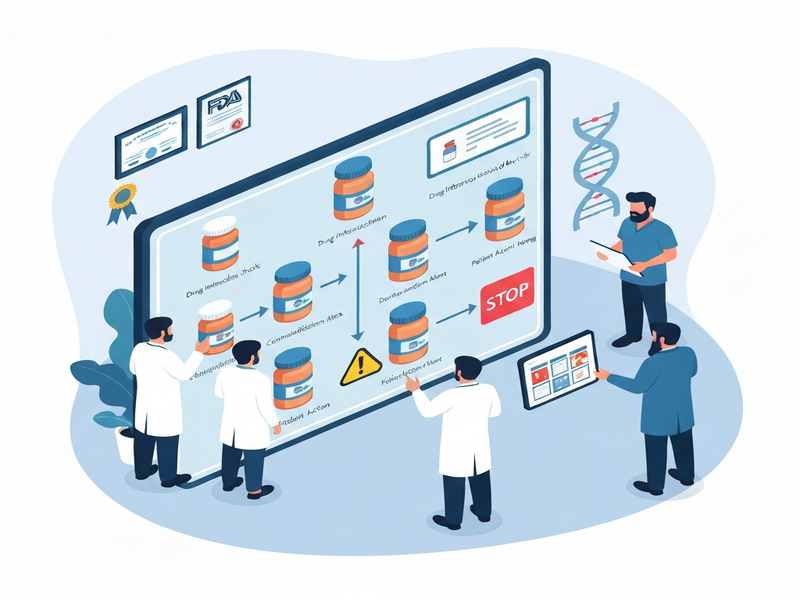
The authors of the DrugBench paper propose a three‑tiered benchmark architecture that mirrors real‑world medication workflows:
- Knowledge Retrieval Layer: Tests a model’s ability to fetch accurate pharmacological facts from a curated drug database.
- Reasoning Layer: Evaluates logical inference over drug interactions, contraindications, and patient‑specific factors (age, comorbidities, renal function).
- Action Generation Layer: Measures the safety of the final recommendation, including dosage formatting, warning articulation, and citation of sources.
Each tier contains multiple task families—such as “Interaction Classification,” “Dosage Calculation,” and “Adverse Event Explanation”—with balanced positive and negative examples. The benchmark also supplies a severity score for every test case, enabling models to be ranked not just by accuracy but by risk mitigation potential.
How It Works in Practice
Implementing DrugBench in a development pipeline follows a straightforward workflow:
- Dataset Ingestion: The benchmark’s JSONL files are loaded into a vector store (e.g., Chroma DB integration) to support fast semantic search.
- Prompt Engineering: Developers craft system prompts that explicitly request source citations and severity‑aware reasoning.
- Model Invocation: The LLM (e.g., an OpenAI ChatGPT variant via the OpenAI ChatGPT integration) processes each test case, returning a structured response.
- Automated Scoring: A scoring script compares the model’s output against the gold‑standard answer, applying weighted penalties for high‑severity mistakes.
- Feedback Loop: Errors are logged, and the prompt or fine‑tuning data is iteratively refined to reduce risk.
What sets DrugBench apart is its emphasis on “severity‑aware” evaluation. Instead of treating all errors equally, the benchmark penalizes a model more heavily for missing a life‑threatening interaction than for a minor dosage rounding error. This mirrors clinical triage, where the cost of a false negative can be catastrophic.
Evaluation & Results
The researchers benchmarked four leading LLM families: GPT‑4, Claude‑2, LLaMA‑2‑Chat, and a domain‑specific MedGPT. They ran each model across 12,000 curated drug scenarios, spanning common prescriptions, polypharmacy cases, and rare disease treatments.
Key findings include:
- Overall Accuracy: GPT‑4 achieved the highest raw accuracy (84%), followed by Claude‑2 (78%). Domain‑specific MedGPT lagged at 71%, suggesting that size and general language understanding still dominate safety performance.
- Severity‑Weighted Scores: When high‑severity errors were weighted double, Claude‑2 outperformed GPT‑4 (0.68 vs. 0.62), indicating better risk‑aware reasoning despite lower overall accuracy.
- Interaction Detection: All models struggled with multi‑drug interaction chains involving three or more agents, with error rates exceeding 30% for the most complex cases.
- Dosage Reasoning: Models frequently omitted renal‑adjustment guidelines, a critical oversight for patients with kidney disease.
These results demonstrate that raw performance metrics can be misleading; a model that appears more accurate may still pose higher clinical risk if it fails on severe cases. DrugBench’s severity‑aware scoring surfaces these hidden vulnerabilities.
Why This Matters for AI Systems and Agents
For AI practitioners building medication‑related agents—whether chat‑based triage bots, prescription‑verification pipelines, or clinical decision support systems—the benchmark offers a concrete safety contract:
- Risk‑Based Model Selection: Teams can prioritize models that minimize high‑severity errors, aligning with regulatory expectations such as FDA’s Good Machine Learning Practice (GMLP).
- Prompt‑Design Guidance: The layered task structure reveals which prompt patterns elicit more reliable citations and warnings, informing prompt libraries for production agents.
- Continuous Monitoring: By integrating DrugBench into CI/CD pipelines, developers can detect regressions when updating model versions or adding new knowledge bases.
- Orchestration Benefits: In multi‑agent ecosystems, a safety‑focused LLM can act as a “gatekeeper” that validates recommendations from faster, less‑accurate agents before they reach clinicians.
These capabilities directly support the development of trustworthy AI assistants that can be deployed at scale in hospitals, telehealth platforms, and pharmacy automation systems.
What Comes Next
While DrugBench marks a significant step forward, several open challenges remain:
- Dataset Expansion: Current coverage focuses on FDA‑approved drugs in the United States. Extending the benchmark to include global formularies, herbal supplements, and emerging biologics will improve generalizability.
- Real‑World Validation: Embedding the benchmark in live clinical workflows and measuring downstream outcomes (e.g., reduced adverse events) is essential to prove its practical impact.
- Explainability Integration: Future versions could require models to generate causal graphs or counterfactual explanations for each recommendation, enhancing clinician trust.
- Adaptive Scoring: Incorporating patient‑specific risk profiles (e.g., frailty scores) could allow dynamic weighting of severity based on individual vulnerability.
Organizations looking to adopt DrugBench can start by exploring the UBOS platform overview, which offers built‑in support for vector stores, prompt orchestration, and workflow automation. For teams focused on enterprise‑grade deployments, the Enterprise AI platform by UBOS provides compliance‑ready pipelines that integrate safety benchmarks directly into model governance dashboards.
In summary, DrugBench equips the AI‑healthcare community with a rigorous, severity‑aware yardstick for medication safety. By aligning model evaluation with clinical risk, it paves the way for safer, more trustworthy AI agents that can truly augment medical professionals without compromising patient well‑being.
Andrii Bidochko
CTO UBOS
Andrii Bidochko is an AI entrepreneur and researcher focused on AI agents, reinforcement learning, and autonomous systems. He writes about the technologies shaping the future of machine intelligence, from frontier models and agent architectures to real-world AI applications.