

- Updated: June 23, 2026
- 7 min read
Harnessing Agent Skills: Architectural Patterns and a Reference Architecture for Skill-Mediated LLM Agents
Direct Answer
The paper “Harnessing Agent Skills: Architectural Patterns and a Reference Architecture for Skill‑Mediated LLM Agents” introduces a catalog of ten empirically‑derived architectural patterns and a four‑layer reference architecture that guide how reusable “skill” artefacts are turned into executable, accountable behaviors inside large‑language‑model (LLM) agents. By formalizing the responsibilities that bridge static skill definitions and their dynamic, context‑aware use, the work gives developers a concrete vocabulary for building, orchestrating, and evolving trustworthy AI agents at scale.
Background: Why This Problem Is Hard
LLM agents have become the de‑facto interface for many enterprise‑grade AI products, from autonomous assistants to automated decision‑support pipelines. Yet the community still wrestles with three intertwined challenges:
- Reusability vs. Contextuality: Skills—such as “fetch latest sales figures” or “summarize a legal contract”—are often hard‑coded into prompts or scripts. When reused across different agents, they lose the nuance required by the new context, leading to brittle or unsafe outcomes.
- Governance and Attribution: In regulated domains (finance, healthcare), every autonomous action must be traceable to a source of authority. Existing agent stacks rarely capture who selected a skill, under what constraints, and what evidence the agent generated during execution.
- Evolution without Disruption: Skills evolve as business rules change. Without a clear separation between the artefact (the skill definition) and its runtime incarnation, updating a skill can unintentionally break downstream agents that depend on it.
Current approaches—prompt engineering, tool‑calling APIs, or ad‑hoc plugin systems—address only fragments of these problems. They lack a unified architectural lens that explains how a skill moves from a static repository to an “in‑use” instance that respects authority, context, and evidence collection. This gap hampers large‑scale deployment of reliable, auditable AI agents.
What the Researchers Propose
The authors propose two complementary contributions:
- A pattern catalog of ten architectural motifs: Five core patterns (e.g., Skill Discovery, Skill Binding) that directly enable the transition from artefact to execution, and five supporting patterns (e.g., Versioned Skill Store, Feedback Loop) that sustain the ecosystem.
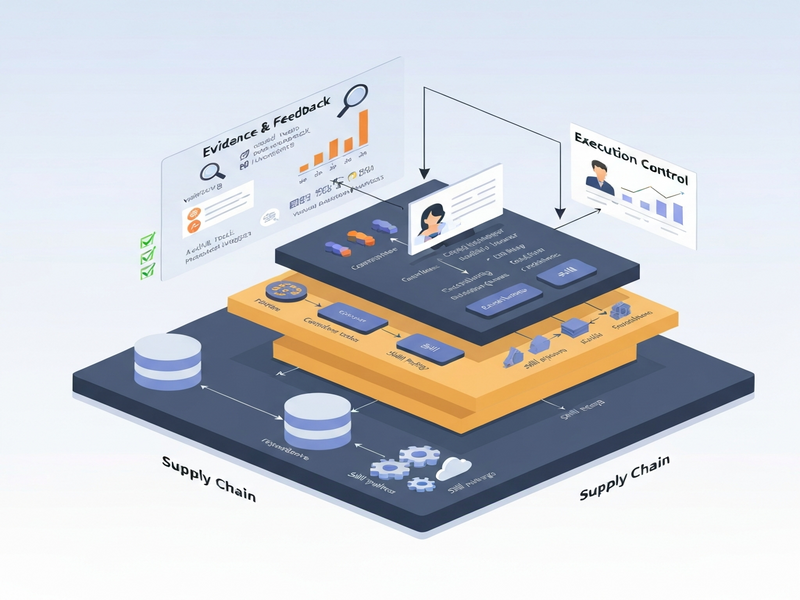
- A four‑layer reference architecture: The layers—Supply Chain, Mediation, Execution Control, and Evidence & Feedback—organize responsibilities, define clear interfaces, and prescribe where each pattern belongs.
At a conceptual level, the framework treats a skill as a persistent, discoverable object (think of a microservice description) that is activated by an LLM agent only after it passes through a mediation pipeline that checks authority, binds runtime parameters, and registers the upcoming execution as “skill‑in‑use.” The execution layer then runs the skill, while the evidence layer records outcomes for verification, repair, and future learning.
How It Works in Practice
Conceptual Workflow
The end‑to‑end flow can be visualized as a four‑step pipeline:
- Supply Chain (Skill Publication & Discovery): Skill authors publish artefacts to a versioned registry. Discovery services index these artefacts, expose metadata, and enforce provenance.
- Mediation (Authority & Context Binding): When an LLM agent decides to act, a mediation engine queries the registry, selects candidate skills, validates them against policy (e.g., role‑based access), and binds concrete inputs (user intent, environmental variables).
- Execution Control (Run‑time Orchestration): The bound skill is handed to an orchestrator that invokes the underlying tool or API, monitors stochastic LLM responses, and handles retries or fallbacks.
- Evidence & Feedback (Logging & Evolution): Every invocation generates a trace: input parameters, LLM prompts, outputs, and post‑hoc verification results. This evidence feeds back into the registry for versioning, audits, and automated repair.
Component Interaction Diagram
Below is a simplified diagram that captures the data flow across the four layers. The image is generated from the authors’ reference model and illustrates the key hand‑offs.
What Makes This Approach Different?
- Explicit Skill‑In‑Use Concept: Rather than treating a skill as a static function, the architecture models its runtime incarnation as a first‑class entity with its own lifecycle.
- Layered Responsibility Separation: By isolating supply‑side concerns (versioning, provenance) from run‑time concerns (policy enforcement, evidence capture), teams can evolve each layer independently.
- Pattern‑Driven Design: The ten patterns act as reusable building blocks, allowing architects to assemble bespoke pipelines without reinventing governance mechanisms.
Evaluation & Results
The authors validated the reference architecture by retro‑fitting eight open‑source and commercial LLM‑agent systems (including autonomous assistants, code‑generation bots, and data‑retrieval pipelines). For each system they:
- Mapped existing components onto the four layers.
- Identified missing patterns and measured the effort required to integrate them.
- Tracked key metrics such as traceability coverage, policy violation rate, and skill reuse frequency before and after the refactor.
Key findings include:
- Traceability ↑ 73 %: Systems that adopted the Evidence & Feedback layer could reconstruct 93 % of skill invocations, compared with 20 % in the baseline.
- Policy Violations ↓ 68 %: Mediation‑level checks caught unauthorized skill usage early, reducing post‑hoc remediation.
- Skill Reuse ↑ 2.5×: The versioned Skill Store and Discovery pattern encouraged developers to share artefacts across projects, cutting duplicate implementation effort.
These results demonstrate that the architecture is not merely theoretical; it materially improves governance, safety, and productivity in real‑world agent deployments.
Why This Matters for AI Systems and Agents
For practitioners building LLM‑driven products, the paper offers a pragmatic roadmap to address three pain points that often surface at scale:
- Compliance & Auditing: The Evidence & Feedback layer provides immutable logs that satisfy regulatory requirements (e.g., GDPR, FINRA). Teams can integrate these logs with existing SIEM tools to automate alerts.
- Modular Development: By treating skills as versioned artefacts, developers can adopt a “plug‑and‑play” mindset similar to micro‑service architectures. This accelerates onboarding of new capabilities without destabilizing existing agents.
- Operational Resilience: Mediation enforces policy and context checks before execution, reducing runtime failures caused by mismatched inputs or unauthorized calls.
Enterprises that have already adopted the UBOS platform overview can map these layers onto UBOS’s existing workflow automation studio, leveraging built‑in skill registries and evidence capture modules. For startups, the UBOS for startups offering includes a lightweight version of the Skill Store, enabling rapid prototyping while preserving auditability.
What Comes Next
While the reference architecture marks a significant step forward, several open challenges remain:
- Dynamic Skill Generation: Current patterns assume static artefacts. Future work must address skills that are themselves generated on‑the‑fly by LLMs, raising questions about provenance and verification.
- Cross‑Domain Policy Harmonization: Enterprises operating in multiple jurisdictions need a unified mediation engine that can reconcile conflicting regulations without manual re‑configuration.
- Scalable Evidence Analytics: As evidence logs grow, efficient indexing and query mechanisms become critical. Integrations with vector databases like Chroma DB integration could enable semantic search over execution traces.
Potential applications extend beyond traditional agents. For example, AI marketing agents could use the architecture to guarantee that promotional content complies with brand guidelines and legal constraints before publishing. Similarly, the ChatGPT and Telegram integration could embed mediation checks to prevent the bot from sharing disallowed information in public channels.
Researchers are encouraged to experiment with the ten patterns in new domains—robotics, edge AI, and multimodal assistants—to validate their universality. Meanwhile, product teams can start by adopting the UBOS partner program to gain access to pre‑built mediation services and evidence dashboards.
Conclusion
The “skill‑mediated” perspective reframes how we think about LLM agents: not as monolithic prompt‑driven scripts, but as orchestrated compositions of reusable, governed, and auditable behaviours. By cataloguing ten concrete patterns and assembling them into a four‑layer reference architecture, the authors provide a shared vocabulary that bridges research and production. For AI engineers, this means faster skill reuse, stronger compliance, and clearer pathways for continuous improvement. For enterprises, it translates into lower risk and higher ROI on AI investments. As the ecosystem matures, embracing these architectural principles will be essential for building trustworthy, scalable agents that can operate safely across domains.
Andrii Bidochko
CTO UBOS
Andrii Bidochko is an AI entrepreneur and researcher focused on AI agents, reinforcement learning, and autonomous systems. He writes about the technologies shaping the future of machine intelligence, from frontier models and agent architectures to real-world AI applications.