

- Updated: June 23, 2026
- 7 min read
Path-dependent program induction under resource constraints explains human sequence learning
Direct Answer
The paper introduces a Hierarchical Adaptor Grammar (HAG) that models how humans learn sequences by building reusable program-like abstractions while operating under strict memory and computation limits. This matters because it bridges cognitive science and modern AI, offering a principled way to design agents that can generalize from limited data the way people do.
Background: Why This Problem Is Hard
Learning from streams of experience is at the core of every intelligent system—from language models that ingest text to robots that navigate dynamic environments. Yet two intertwined challenges persist:
- Resource constraints. Human cognition and many deployed AI agents cannot store every observation or run exhaustive searches; they must compress information and allocate compute wisely.
- Abstraction discovery. Raw sequences (e.g., notes in a melody) contain latent structure. Extracting reusable building blocks—like motifs or grammatical rules—requires a mechanism that can infer higher‑order programs without explicit supervision.
Traditional sequence‑learning models, such as n‑gram chunkers or fixed probabilistic grammars, either ignore resource limits or rely on a static set of primitives. Consequently, they struggle to explain why humans sometimes simplify a pattern or why reaction times spike at perceived “boundaries.” Recent advances in program induction provide powerful search tools, but they typically assume unlimited memory and compute, making them ill‑suited for modeling bounded human learners.
What the Researchers Propose
The authors combine two theoretical lenses—rate‑distortion theory and program induction via adaptor grammars—to create a unified framework that respects cognitive constraints while still discovering expressive programs.
Key Concepts
- Rate‑Distortion Trade‑off. This principle quantifies how much information (rate) a learner can afford to encode versus how much error (distortion) it tolerates. By explicitly modeling this trade‑off, the system can decide when to compress a sequence and when to retain detail.
- Adaptor Grammar. An adaptor grammar is a probabilistic grammar that can “adapt” its production rules based on observed data, effectively learning a library of reusable subprograms.
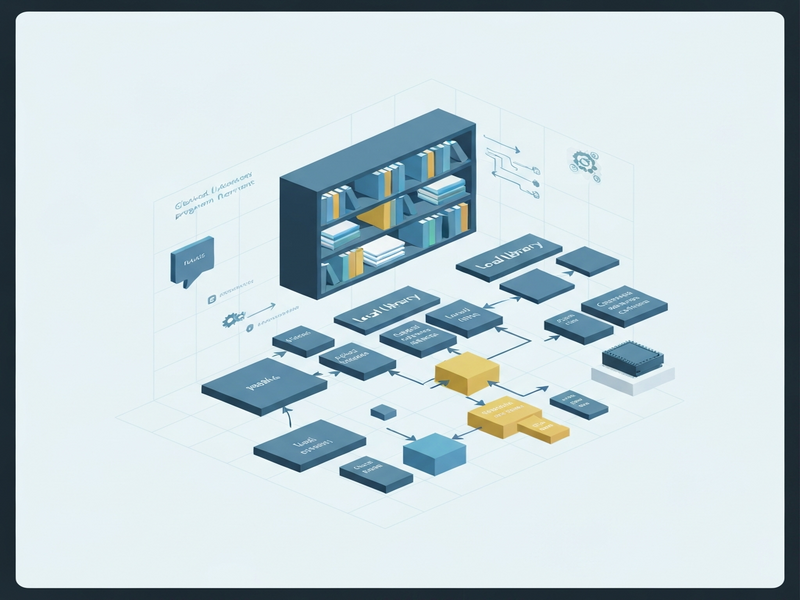
- Hierarchical Structure. HAG introduces two layers of libraries:
- Local library – task‑specific programs built while solving a single sequence.
- Global library – cross‑task abstractions that persist across many learning episodes.
Both libraries are governed by shared constraints on memory (how many symbols can be stored) and computation (how many inference steps are affordable). The hierarchy allows the system to reuse global abstractions for new tasks, while still tailoring local programs to the idiosyncrasies of each sequence.
How It Works in Practice
At a high level, HAG operates as a three‑stage pipeline that can be visualized as a loop between observation, compression, and reuse.
1. Observation & Encoding
When a new sequence arrives (e.g., a series of musical notes), the model first encodes each element using a low‑level symbol set. This raw encoding respects the current memory budget.
2. Program Induction under Constraints
The core induction engine searches for a program that reproduces the observed sequence. The search is guided by two forces:
- Distortion penalty. Programs that deviate from the data incur a cost proportional to the error.
- Rate penalty. Longer or more complex programs consume more bits of memory and more compute cycles, incurring a separate cost.
The optimizer selects the program that minimizes the combined penalty, effectively balancing fidelity against resource usage.
3. Library Update & Reuse
Once a program is accepted, its constituent sub‑programs are candidates for inclusion in the local library. If a sub‑program appears frequently across tasks, it graduates to the global library, becoming a reusable primitive for future inductions. The global library is pruned periodically to stay within the overall memory budget.
What Sets HAG Apart
- Dynamic abstraction. Unlike fixed grammars, HAG’s libraries evolve with experience, mirroring how humans acquire new concepts.
- Explicit resource budgeting. The rate‑distortion objective forces the system to make trade‑offs that are observable in behavior (e.g., longer reaction times at program boundaries).
- Hierarchical reuse. By separating local and global libraries, HAG can capture both task‑specific quirks and domain‑wide regularities.
Evaluation & Results
The authors validated HAG through two complementary avenues: synthetic simulations and a human behavioral experiment involving melodic sequence learning.
Simulation Benchmarks
In controlled simulations, HAG was pitted against three baselines:
- A fixed adaptor grammar with a static rule set.
- A shallow chunking model that groups adjacent symbols without hierarchical abstraction.
- A naïve program inducer that ignores memory constraints.
Across a range of memory‑and‑compute budgets, HAG consistently achieved a lower combined rate‑distortion score, meaning it produced more accurate reconstructions while using fewer resources. Moreover, when tested on out‑of‑sample continuation tasks, HAG’s predictions were markedly more human‑like, indicating stronger generalization.
Human Melodic Sequence‑Learning Experiment
Participants listened to short melodic fragments and were later asked to recall them or continue the pattern. The researchers recorded two behavioral signatures:
- Recall errors. Participants tended to simplify complex passages, effectively “compressing” the melody—a pattern predicted by HAG’s distortion‑aware compression.
- Reaction times. Participants paused longer at points that HAG identified as program boundaries, suggesting that cognitive processing aligns with the model’s inferred program structure.
Trial‑by‑trial model fitting showed that the hierarchical library version of HAG explained both recall accuracy and continuation choices better than any alternative, including the non‑hierarchical baselines. This result supports the claim that human learners operate as bounded program inductors, where the order of experience shapes the abstractions they later reuse.
Why This Matters for AI Systems and Agents
Understanding learning as a resource‑constrained program induction process has immediate practical implications for the design of next‑generation AI agents:
- Sample‑efficient adaptation. Agents can acquire reusable skills from a handful of interactions, reducing the data hunger that plagues large language models.
- Predictable latency. By exposing the computational budget as a tunable parameter, system architects can guarantee response‑time bounds—critical for real‑time applications such as conversational assistants.
- Modular knowledge bases. The global library concept maps naturally onto a shared knowledge graph or skill repository, enabling multiple agents to benefit from each other’s discoveries.
- Human‑aligned behavior. Since HAG reproduces observable human signatures (error patterns, reaction‑time spikes), agents built on this principle are more likely to behave in ways that users find intuitive.
Enterprises looking to embed adaptable AI into their workflows can leverage these insights through platforms that support hierarchical skill management. For example, the UBOS platform overview provides tooling for building, versioning, and deploying reusable AI components that align with HAG’s library architecture.
What Comes Next
While HAG marks a significant step forward, several open challenges remain:
- Scalability to high‑dimensional data. Extending the framework from symbolic sequences to raw sensory streams (e.g., video) will require richer primitive vocabularies and more sophisticated search heuristics.
- Online continual learning. Real‑world agents must update their global library without catastrophic forgetting; mechanisms for selective consolidation are still underexplored.
- Integration with deep neural modules. Hybrid systems that combine HAG’s symbolic abstraction with neural perception could capture the best of both worlds.
- User‑controlled resource budgets. Providing developers with intuitive knobs to set memory and compute limits could democratize the technology.
Future research may also investigate how HAG‑style learning interacts with reinforcement signals, social learning, or multimodal contexts. From an industry perspective, the Enterprise AI platform by UBOS is already exploring APIs that let developers plug in hierarchical grammar engines, opening the door to commercial products that learn and adapt under strict latency and cost constraints.
References & Further Reading
For readers who want to dive deeper, the full technical exposition is available in the original arXiv paper. Additional background on rate‑distortion theory can be found in classic information‑theoretic texts, while recent surveys on adaptor grammars provide a broader context for program induction.
Andrii Bidochko
CTO UBOS
Andrii Bidochko is an AI entrepreneur and researcher focused on AI agents, reinforcement learning, and autonomous systems. He writes about the technologies shaping the future of machine intelligence, from frontier models and agent architectures to real-world AI applications.