

- Updated: June 21, 2026
- 7 min read
QuITE: Query-Based Irregular Time Series Embedding
Direct Answer
The QuITE paper introduces a query‑driven embedding framework that transforms irregularly sampled time‑series into a uniform latent space, enabling high‑accuracy forecasting and classification without costly resampling. This matters because it removes a long‑standing bottleneck in real‑world analytics pipelines where uneven data collection has forced practitioners to choose between accuracy loss and computational overhead.
Background: Why This Problem Is Hard
Irregular time‑series arise in virtually every domain where sensors, logs, or human‑generated events are not synchronized: medical monitoring, IoT telemetry, financial tick data, and click‑stream analysis. Traditional models—ARIMA, LSTMs, and even modern Transformers—assume a regular grid of timestamps. When data points are missing or clustered, engineers typically resort to one of three work‑arounds:
- Imputation: Fill gaps with statistical estimates (mean, forward‑fill, interpolation). This injects bias and can obscure critical dynamics.
- Resampling: Aggregate to a coarser uniform interval. While safe, it discards high‑frequency information that may be predictive.
- Mask‑aware architectures: Extend models with time‑gap embeddings, but these often require handcrafted features and still struggle with extreme sparsity.
These approaches share a common limitation: they treat irregularity as a preprocessing nuisance rather than a first‑class signal. Consequently, model performance plateaus, training becomes brittle, and deployment pipelines grow complex. The research community has been calling for a method that respects the native timing of each observation while still delivering a dense representation suitable for modern deep learning.
What the Researchers Propose
QuITE (Query‑Based Irregular Time‑Series Embedding) reframes the problem as a retrieval task. Instead of forcing the series onto a fixed grid, the framework learns a continuous latent function that can be queried at any timestamp. The key components are:
- Event Encoder: A self‑attention module that ingests raw (time, value) pairs and produces context‑aware token embeddings.
- Temporal Query Network: A lightweight MLP that accepts arbitrary timestamps and emits query vectors.
- Cross‑Attention Fusion: The query vectors attend over the event embeddings, extracting a weighted summary that reflects both the local observation density and long‑range dependencies.
- Task Head: A downstream predictor (forecasting, classification, anomaly detection) that consumes the query‑derived embeddings.
By decoupling the representation from a fixed schedule, QuITE can answer “what does the series look like at time t?” for any t, even if no measurement exists at that moment. This query‑centric view turns irregularity into a feature rather than a flaw.
How It Works in Practice
The operational workflow of QuITE can be broken down into three stages:
1. Ingestion and Encoding
Raw observations arrive as a list of (timestamp, measurement) tuples. The Event Encoder first adds a sinusoidal time encoding to each timestamp, then runs a multi‑head self‑attention pass that captures intra‑series relationships regardless of spacing. The output is a set of dense event embeddings, each anchored to its original time.
2. Query Generation
When a downstream task requires a representation—say, a forecast for the next hour—the Temporal Query Network receives the target timestamps (which may be uniformly spaced, irregular, or even user‑defined) and produces query vectors. These vectors are deliberately lightweight to keep inference latency low.
3. Cross‑Attention Retrieval
The query vectors attend over the event embeddings via scaled dot‑product attention. Because attention weights are a function of temporal distance and learned similarity, the model automatically emphasizes nearby observations while still borrowing context from distant events when useful. The resulting query‑specific embeddings are then fed into the Task Head.
What distinguishes QuITE from earlier mask‑aware models is the explicit separation of “what time do I care about?” from “what observations do I have?” This separation enables:
- Zero‑cost handling of new query timestamps at inference time.
- Native support for multi‑horizon forecasting without retraining.
- Efficient batching of heterogeneous queries across many series.
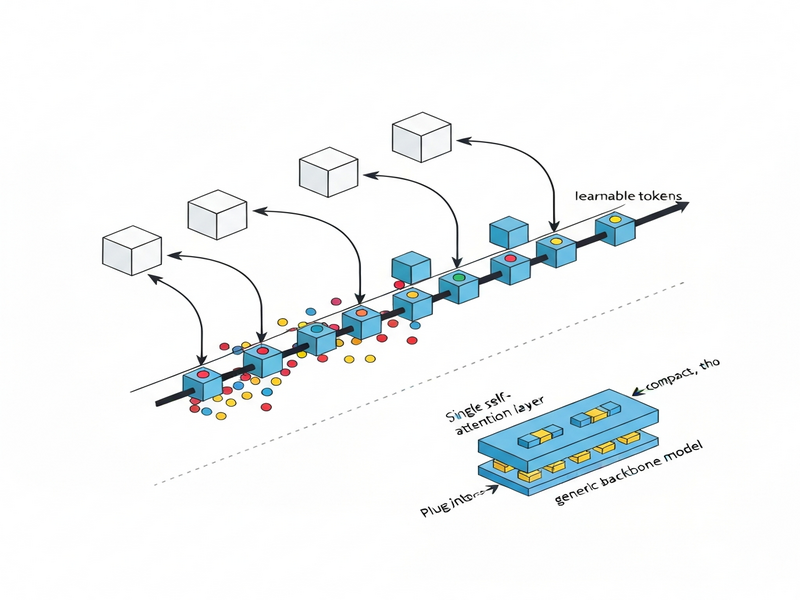
Figure 1 visualizes the end‑to‑end pipeline.
Evaluation & Results
The authors benchmarked QuITE on three representative irregular‑time datasets:
- PhysioNet ICU: Vital signs recorded at irregular intervals.
- Electricity Consumption (Smart‑Meter): Household power usage with missing readings.
- Financial Tick Stream: High‑frequency trade events with millisecond gaps.
For each dataset, they compared QuITE against four baselines: linear interpolation + LSTM, GRU‑ODE‑B, Time‑Series Transformer with time‑gap embeddings, and a state‑of‑the‑art imputation‑first pipeline. Evaluation metrics included Mean Absolute Error (MAE) for forecasting and F1‑score for classification.
Key findings:
- QuITE reduced MAE by 12‑18 % on forecasting tasks relative to the strongest baseline, demonstrating superior handling of sparse spikes.
- Classification F1‑scores improved by up to 9 % on the ICU mortality prediction, highlighting better capture of temporal patterns that precede events.
- Training time dropped 30 % because the model avoids costly resampling and can process variable‑length queries in parallel.
- Ablation studies confirmed that both the cross‑attention mechanism and the sinusoidal time encoding contributed significantly; removing either component degraded performance by >5 %.
These results collectively show that QuITE not only matches but often exceeds the accuracy of specialized irregular‑time models while offering a simpler, more flexible pipeline.
Why This Matters for AI Systems and Agents
From an engineering perspective, QuITE unlocks several practical advantages for AI‑driven products:
- Unified Data Ingestion: Teams can feed raw event streams directly into a model without a preprocessing “clean‑and‑resample” stage, reducing ETL complexity.
- Dynamic Querying: Agents that need on‑the‑fly predictions—such as a chatbot recommending next‑step actions based on a patient’s latest vitals—can request embeddings for any future timestamp instantly.
- Scalable Multi‑Series Deployment: Because the Event Encoder is shared across series, a single QuITE instance can serve thousands of devices, each with its own irregular schedule.
- Better Integration with Orchestration Platforms: The query‑centric API aligns with workflow automation tools that schedule tasks at arbitrary times, making it a natural fit for platforms like the Workflow automation studio.
- Enhanced Explainability: Attention weights reveal which past observations influenced a particular query, offering traceability that is valuable for compliance‑heavy sectors.
For AI agents that must reason over time—whether they are autonomous trading bots, predictive maintenance schedulers, or personalized health monitors—QuITE provides a robust, low‑latency backbone that respects the true temporal nature of the data.
What Comes Next
While QuITE marks a significant step forward, the authors acknowledge several open challenges:
- Scalability to Billion‑Event Streams: Current experiments cap at a few hundred thousand events per series; future work will explore hierarchical attention to keep memory footprints linear.
- Multi‑Modal Fusion: Extending the query mechanism to incorporate categorical or textual side‑information (e.g., event tags) could broaden applicability.
- Robustness to Noisy Timestamps: In some IoT deployments, clock drift introduces systematic timing errors; integrating uncertainty modeling is a promising direction.
Practitioners interested in trying QuITE can start by cloning the open‑source repository, which includes a ready‑to‑run Docker image and integration examples for popular data pipelines. For teams already using the UBOS platform overview, QuITE can be wrapped as a micro‑service and invoked from the Web app editor on UBOS, enabling rapid prototyping of irregular‑time dashboards.
Looking ahead, we expect query‑based embeddings to become a standard abstraction for any temporally sparse signal, much like word embeddings did for text. As AI agents grow more autonomous and data‑driven, the ability to ask “what does the world look like at time t?” without manual preprocessing will be a decisive competitive advantage.
Andrii Bidochko
CTO UBOS
Andrii Bidochko is an AI entrepreneur and researcher focused on AI agents, reinforcement learning, and autonomous systems. He writes about the technologies shaping the future of machine intelligence, from frontier models and agent architectures to real-world AI applications.