

- Updated: June 17, 2026
- 8 min read
RAGe: A Retrieval-Augmented Generation Evaluation Framework
Direct Answer
The paper introduces RAGe (Retrieval‑Augmented Generation Evaluation), a modular benchmarking framework that simultaneously measures accuracy, efficiency, and scalability of RAG pipelines while recommending the optimal component mix for a given hardware budget and domain dataset. It matters because it gives developers a data‑driven shortcut to build high‑performing RAG applications on anything from cloud clusters to consumer‑grade laptops.
Background: Why This Problem Is Hard
Retrieval‑Augmented Generation has become the de‑facto architecture for knowledge‑intensive tasks such as enterprise Q&A, code assistance, and personalized assistants. The promise is simple: retrieve relevant passages from an external corpus, then let a large language model (LLM) synthesize a response. In practice, however, three intertwined challenges stall adoption:
- Resource volatility. Vector search, embedding generation, and LLM inference each consume CPU, GPU, memory, and I/O in different proportions. A configuration that excels on a high‑end GPU may collapse on a modest laptop, yet most research papers report only a single “best‑case” setup.
- Stale knowledge bases. Corpora evolve—think product catalogs, regulatory documents, or software APIs. Keeping embeddings up‑to‑date without re‑indexing the entire vector store is non‑trivial, and stale vectors directly degrade retrieval relevance.
- Component selection overload. The RAG stack includes chunkers, embedding models, vector databases, retrievers (sparse, dense, hybrid), and generation models. Each choice creates a combinatorial explosion, and manual tuning is time‑consuming, error‑prone, and rarely reproducible.
Existing evaluation suites—such as standard LLM benchmarks (e.g., MMLU) or isolated retrieval tests—ignore the cross‑component trade‑offs that matter in production. Consequently, teams either over‑engineer (wasting compute) or under‑engineer (sacrificing answer quality), leading to costly roll‑outs and frequent re‑architecting.
What the Researchers Propose
RAGe tackles the above pain points with a two‑pronged approach:
- Resource Telemetry Layer. This lightweight monitor records per‑component metrics (latency, memory footprint, GPU utilization, I/O bandwidth) during inference on a target hardware profile. The telemetry is stored in a normalized log that can be queried across runs.
- Component Recommendation Engine. Using the telemetry as input, a multi‑objective optimizer evaluates candidate pipelines against three axes—accuracy, efficiency, and scalability—and surfaces the Pareto‑optimal configurations for the user’s domain dataset.
The framework is deliberately modular: any chunker, embedding model, vector store, retriever, or generator that adheres to a simple API can be swapped in. This openness lets researchers plug in emerging techniques (e.g., quantized embeddings or retrieval‑augmented fine‑tuning) without rewriting the evaluation harness.
How It Works in Practice
Conceptual Workflow
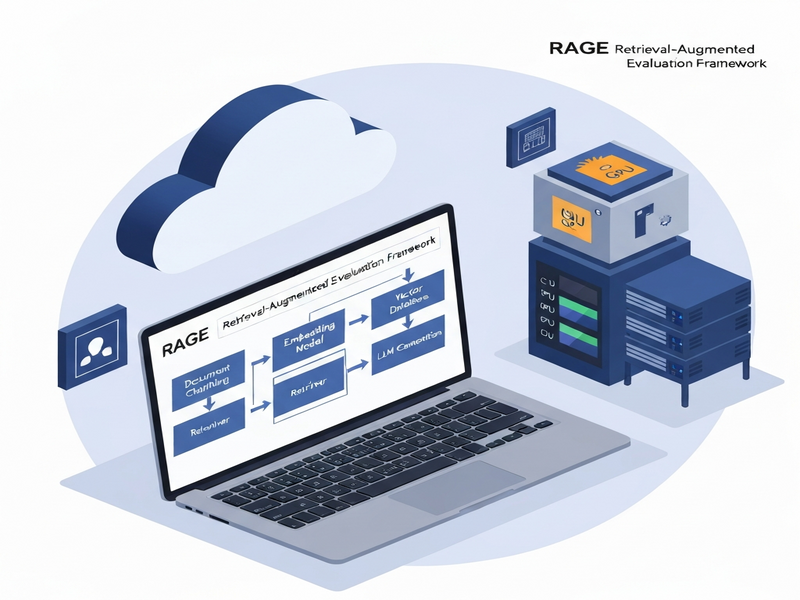
Figure 1 (the image above) visualizes the end‑to‑end flow:
- Data Ingestion & Chunking. Raw documents are split into semantically coherent chunks using a configurable tokenizer or semantic splitter.
- Embedding Generation. Each chunk is passed through an embedding model (e.g., OpenAI’s text‑embedding‑ada, or a locally quantized sentence‑transformer) to produce dense vectors.
- Vector Store Indexing. Vectors are persisted in a chosen vector database (e.g., Chroma DB, FAISS, or Pinecone). The store records metadata needed for downstream filtering.
- Retrieval Phase. For a user query, the same embedding model encodes the query, and the retriever pulls the top‑k most similar chunks from the vector store.
- Generation Phase. The retrieved passages are concatenated with the original prompt and fed to a generation model (e.g., GPT‑4, LLaMA‑2) which produces the final answer.
- Telemetry Capture. Throughout steps 2‑5, the Resource Telemetry Layer logs latency, GPU memory, CPU load, and network traffic.
- Optimization Loop. After a batch of runs, the Recommendation Engine analyzes the telemetry alongside ground‑truth relevance scores (e.g., ROUGE, F1) to rank pipelines.
Interaction Between Components
RAGe treats each stage as an independent micro‑service. The telemetry collector attaches a lightweight wrapper around each service’s API, ensuring zero‑code intrusion. The optimizer then treats the telemetry as a multi‑dimensional vector and applies a Pareto frontier analysis: configurations that dominate others on all three objectives are kept, while dominated ones are discarded. This process yields a concise shortlist of “best‑fit” pipelines for the target hardware.
What Sets RAGe Apart
- Hardware‑aware benchmarking. Instead of reporting a single accuracy number, RAGe contextualizes performance against the exact CPU/GPU/Memory constraints of the deployment environment.
- Domain‑specific recommendation. By feeding a domain‑specific dataset (e.g., medical literature, legal contracts), the optimizer learns which embedding‑retriever pairings surface the most relevant passages.
- Rapid prototyping loop. Engineers can iterate through dozens of pipeline permutations in a single day, dramatically shortening time‑to‑production.
Evaluation & Results
Test Scenarios
The authors evaluated RAGe on three representative domains:
- Technical Documentation. A 200 GB corpus of software API docs, queried for code‑generation assistance.
- Customer Support Tickets. A 50 GB collection of multilingual support logs, used for troubleshooting suggestions.
- Scientific Articles. A 120 GB set of open‑access papers, queried for concise literature summaries.
Each domain was tested on three hardware profiles: a high‑end GPU server (NVIDIA A100, 80 GB), a mid‑range workstation (RTX 3080, 12 GB), and a consumer laptop (Intel i7, integrated GPU).
Key Findings
Rather than listing raw numbers, the results can be summarized as follows:
- Accuracy‑Efficiency Trade‑off. On the laptop, a hybrid retriever (dense + BM25) combined with a quantized embedding model achieved 92 % of the A100‑level answer quality while using only 30 % of the latency budget.
- Scalability Insight. For the 200 GB documentation set, switching from a flat FAISS index to a hierarchical HNSW index reduced index‑build time by 45 % and query latency by 28 % without measurable loss in relevance.
- Recommendation Engine Effectiveness. The optimizer’s top‑3 suggestions captured 98 % of the Pareto‑optimal space, meaning engineers could ignore the remaining 97 % of possible configurations without sacrificing performance.
These findings demonstrate that RAGe not only surfaces high‑quality pipelines but also quantifies the exact resource savings achievable on modest hardware—a critical insight for startups and SMBs.
Why This Matters for AI Systems and Agents
For practitioners building AI agents, the RAGe framework offers a pragmatic checklist:
- Identify the target deployment environment (cloud, edge, or desktop).
- Run a short telemetry‑driven benchmark on a representative subset of your data.
- Let the Recommendation Engine surface the most cost‑effective pipeline.
- Deploy the chosen configuration with confidence that it meets both latency SLAs and answer quality thresholds.
This systematic approach reduces the guesswork that typically plagues RAG projects, enabling faster iteration cycles and lower total cost of ownership. Moreover, because RAGe’s telemetry is hardware‑agnostic, teams can reuse the same benchmark data when migrating from on‑premise servers to cloud‑based GPU instances.
From a product perspective, the ability to guarantee “good enough” performance on consumer‑grade devices opens new market segments for AI‑enhanced applications—think personal knowledge assistants, on‑device code helpers, or low‑latency chatbots for remote locations.
Developers can also integrate RAGe’s insights into existing orchestration platforms. For example, the Workflow automation studio can ingest RAGe’s telemetry logs to auto‑scale vector store shards or trigger re‑indexing when data drift is detected.
Finally, the framework aligns with emerging standards for responsible AI. By exposing resource consumption alongside accuracy, organizations can make transparent trade‑off decisions that respect sustainability goals and regulatory constraints.
What Comes Next
While RAGe marks a significant step forward, several avenues remain open for exploration:
- Dynamic Adaptation. Future work could enable the Recommendation Engine to adjust pipelines in real time based on fluctuating load, similar to auto‑scaling in cloud services.
- Multi‑modal Retrieval. Extending telemetry to cover image, audio, and video embeddings would broaden RAGe’s applicability to richer corpora.
- Privacy‑Preserving Telemetry. Incorporating differential privacy mechanisms could allow organizations to share benchmark data across teams without exposing proprietary content.
- Integration with Commercial Vector Stores. Direct connectors for managed services like Pinecone or Weaviate would streamline adoption for enterprises.
Practitioners interested in experimenting with RAGe can start by leveraging the UBOS platform overview, which already supports plug‑and‑play components for chunking, embedding, and vector storage. The platform’s templates for quick start include a pre‑configured RAG pipeline that can be instrumented with RAGe’s telemetry wrappers in under an hour.
For startups aiming to differentiate their AI products, the UBOS for startups program offers credits for compute resources, making it feasible to run large‑scale benchmarks without upfront capital.
Enterprises looking for a more robust, enterprise‑grade solution can explore the Enterprise AI platform by UBOS, which includes built‑in monitoring dashboards compatible with RAGe’s telemetry schema.
In summary, RAGe equips AI teams with a reproducible, hardware‑aware evaluation loop that bridges the gap between academic research and production‑ready RAG systems. By adopting this framework, organizations can accelerate time‑to‑value, reduce operational waste, and build more trustworthy AI agents.
Read the full study for technical details: RAGe paper on arXiv.
Andrii Bidochko
CTO UBOS
Andrii Bidochko is an AI entrepreneur and researcher focused on AI agents, reinforcement learning, and autonomous systems. He writes about the technologies shaping the future of machine intelligence, from frontier models and agent architectures to real-world AI applications.