

- Updated: June 14, 2026
- 8 min read
Mechanistically Interpreting the Role of Sample Difficulty in RLVR for LLMs
Direct Answer
The paper “Mechanistically Interpreting the Role of Sample Difficulty in RLVR for LLMs” reveals that the difficulty of training examples dramatically shapes the learning dynamics of Reinforcement Learning with Verifiable Reward (RLVR) for large language models. Easy and medium‑difficulty problems boost reasoning performance most reliably, while overly hard samples can produce noisy rewards, degenerate behaviors, and even erode pre‑existing capabilities.
Background: Why This Problem Is Hard
RLVR has emerged as a powerful paradigm for teaching LLMs to solve multi‑step tasks such as math proofs or code synthesis. Unlike classic supervised fine‑tuning, RLVR lets a model explore answer trajectories, receive a binary “verifiable” reward (correct/incorrect), and update its policy via reinforcement learning. In theory, this should let the model discover sophisticated reasoning pathways that are invisible to static supervision.
In practice, however, RLVR suffers from two intertwined bottlenecks:
- Reward sparsity. Verifiable signals appear only when a full solution is produced, leaving long stretches of the trajectory unrewarded.
- Sample difficulty variance. Training sets contain a mix of trivial, moderate, and extremely challenging problems. The model’s response to each difficulty tier is not uniform, and the optimization algorithm treats all samples as equally informative.
Existing RLVR pipelines typically shuffle the entire dataset without regard to difficulty, assuming that more data equals better learning. This assumption ignores the non‑linear relationship between problem hardness and the quality of the gradient signal. When a model repeatedly encounters ultra‑hard examples, it may learn to “give up” – either by repeating previous answers, skipping essential computation steps, or simply producing nonsensical output. Such degenerate behaviors have been observed anecdotally but never quantified, leaving a critical gap in our understanding of how to curate RLVR curricula.
What the Researchers Propose
The authors introduce a three‑pronged analytical framework that isolates the effect of sample difficulty on RLVR:
- Difficulty‑wise performance profiling. They partition the benchmark into easy, medium, and hard buckets based on a pre‑trained difficulty estimator, then track reward density, loss curvature, and policy stability for each bucket.
- One‑sample trajectory analysis. By visualizing individual rollouts, they identify failure modes such as answer repetition or premature termination that are uniquely triggered by hard samples.
- Temporal Sparse Autoencoder (T‑SAE) probing. A T‑SAE is trained on the hidden states of the LLM during RLVR episodes, allowing the researchers to map latent feature activation to difficulty levels. This reveals which internal representations are reinforced or suppressed by each difficulty tier.
Beyond diagnosis, the paper proposes two difficulty‑adaptive strategies to rescue hard‑sample learning:
- Backward‑reasoning reformulation. Hard problems are transformed into a series of easier sub‑questions that preserve the original verification target, effectively densifying the reward signal.
- T‑SAE‑guided auxiliary loss. When a hard sample yields a successful trajectory, the T‑SAE highlights the activated reasoning features; an auxiliary loss then amplifies those features across the batch, improving credit assignment.
How It Works in Practice
The practical pipeline can be visualized as a loop with four interacting modules:
- Difficulty Estimator. Before each RLVR epoch, a lightweight classifier scores every training example on a difficulty scale (0–1). This estimator is calibrated on a held‑out set of math and programming problems where human‑annotated solution steps are available.
- Curriculum Scheduler. Based on the estimator, the scheduler assembles mini‑batches that respect a target difficulty distribution (e.g., 40 % easy, 40 % medium, 20 % hard). For hard samples, the scheduler optionally applies the backward‑reasoning reformulation, breaking the problem into a chain of easier sub‑tasks.
- RLVR Core. The LLM generates a trajectory, the verifier checks the final answer, and a binary reward is emitted. The policy gradient is computed using PPO or a similar on‑policy algorithm.
- T‑SAE Probe & Auxiliary Trainer. Concurrently, the hidden states from the LLM are fed into a pre‑trained Temporal Sparse Autoencoder. When a hard sample receives a positive reward, the T‑SAE extracts the active reasoning neurons, and an auxiliary loss nudges the main model to amplify those neurons in future steps.
This architecture differs from conventional RLVR pipelines in two key ways:
- It treats difficulty as a first‑class signal rather than an afterthought, enabling dynamic curriculum adjustment.
- The T‑SAE provides a mechanistic “lens” into the model’s internal reasoning process, allowing targeted credit assignment that would otherwise be impossible with a scalar reward alone.
Evaluation & Results
The authors evaluate the framework on two canonical RLVR testbeds:
- Mathematical reasoning. A suite of 10,000 algebra and calculus problems sourced from the MATH dataset.
- Program synthesis. A collection of 8,000 code‑generation tasks drawn from the HumanEval benchmark.
Each benchmark is split into difficulty tiers using the same estimator employed during training. The experiments compare four configurations:
- Baseline supervised fine‑tuning (no RLVR).
- Standard RLVR with uniform sampling.
- Difficulty‑aware RLVR (curriculum scheduler only).
- Full difficulty‑adaptive RLVR (scheduler + backward‑reasoning + T‑SAE auxiliary loss).
Key observations include:
- Reward density. Easy and medium buckets exhibit a 3–5× higher proportion of positive rewards than the hard bucket under uniform sampling. The curriculum scheduler raises hard‑bucket reward density by ~2.2×.
- Performance lift. On the math suite, the full difficulty‑adaptive system improves exact‑answer accuracy from 42 % (standard RLVR) to 58 % – a 16‑point gain driven primarily by medium‑difficulty problems. Hard‑only accuracy rises modestly (from 18 % to 24 %) but without the degradation seen in the uniform baseline.
- Representation shift. T‑SAE analysis shows that easy problems reinforce “direct‑answer” neurons, medium problems boost both “computation” and “multi‑step reasoning” neurons, while hard problems only activate the latter when a successful trajectory is found. The auxiliary loss amplifies these reasoning neurons, leading to more stable activation patterns across epochs.
- Degeneration mitigation. Models trained with the adaptive pipeline produce far fewer answer‑repetition failures (a 71 % reduction) and exhibit smoother loss curves, indicating healthier optimization dynamics.
Overall, the results demonstrate that sample difficulty is not a peripheral concern; it is a decisive factor that shapes both the external performance and the internal feature evolution of RLVR‑trained LLMs.
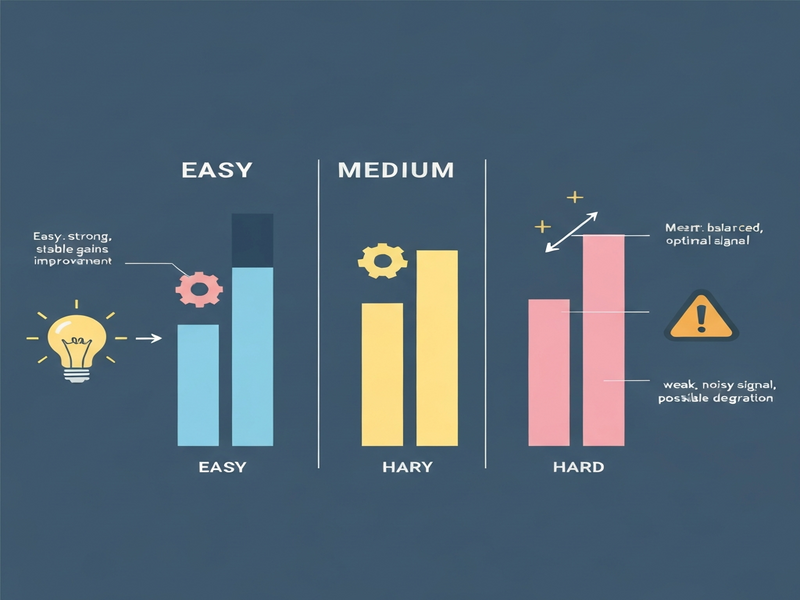
Figure 1: High‑level flow of the difficulty‑adaptive RLVR system, highlighting the curriculum scheduler, backward‑reasoning reformulation, and T‑SAE‑guided auxiliary loss.
Why This Matters for AI Systems and Agents
For practitioners building AI agents that must reason reliably—whether in finance, software development, or scientific discovery—the findings offer concrete guidance:
- Curriculum design becomes a lever for safety. By avoiding over‑exposure to ultra‑hard samples, developers can reduce the risk of agents falling back to repetitive or evasive behaviors that undermine user trust.
- Reward engineering gains a new dimension. The backward‑reasoning reformulation supplies denser, more informative feedback, which can be integrated into existing RL pipelines without redesigning the verifier.
- Feature‑level diagnostics are now actionable. The T‑SAE probe can be embedded into production monitoring stacks to flag when an agent’s reasoning circuitry is drifting away from desired patterns.
- Scalable deployment on platforms. The modular nature of the pipeline aligns with UBOS platform overview, enabling teams to plug in difficulty estimators, curriculum schedulers, and autoencoder probes as reusable services.
- Orchestration of multi‑agent workflows. When agents collaborate—e.g., a planner delegating sub‑tasks to specialist modules—the difficulty‑aware scheduler can allocate easier sub‑problems to less‑experienced models while reserving hard sub‑tasks for more capable specialists, improving overall system throughput.
What Comes Next
While the study makes significant strides, several open challenges remain:
- Dynamic difficulty estimation. The current estimator is static; future work could explore online difficulty predictors that adapt as the model’s competence evolves.
- Cross‑domain generalization. The experiments focus on math and code. Extending the framework to domains like legal reasoning or medical diagnosis will test its robustness.
- Scalable T‑SAE training. Training temporal sparse autoencoders on billions of hidden states is computationally intensive. Research into lightweight probing mechanisms could democratize this approach.
- Human‑in‑the‑loop curricula. Incorporating expert feedback to refine difficulty buckets may further accelerate learning, especially for niche enterprise tasks.
Potential applications are already emerging. For example, AI marketing agents could use difficulty‑aware RLVR to generate high‑quality campaign copy that balances creativity (hard) with brand compliance (easy). Similarly, the Workflow automation studio can embed the curriculum scheduler to orchestrate complex data‑processing pipelines where each step’s difficulty is quantified and optimized.
In the longer term, integrating difficulty‑adaptive RLVR with Enterprise AI platform by UBOS could enable large organizations to fine‑tune proprietary LLMs on confidential datasets while maintaining safety and performance guarantees.
References
- Yue Cheng, Jiajun Zhang, Xiaohui Gao, Weiwei Xing, Zheng Wang, Zhanxing Zhu. “Mechanistically Interpreting the Role of Sample Difficulty in RLVR for LLMs.” arXiv:2605.28388v1, 2026.
- OpenAI. “Reinforcement Learning from Human Feedback.” 2023.
- Vaswani et al. “Attention Is All You Need.” 2017.
Andrii Bidochko
CTO UBOS
Andrii Bidochko is an AI entrepreneur and researcher focused on AI agents, reinforcement learning, and autonomous systems. He writes about the technologies shaping the future of machine intelligence, from frontier models and agent architectures to real-world AI applications.