

- Updated: June 10, 2026
- 7 min read
You Are in Control of Your State: Why Human Outcomes Are Controllable Through Causal State Intervention
Direct Answer
The paper introduces a causal‑state‑intervention framework that treats an individual’s moment‑to‑moment latent state as a controllable weighting vector, enabling precise manipulation of human outcomes at the instant a decision is formed. This matters because it offers a scientifically grounded pathway to turn the notorious within‑person variability into a predictable lever for digital health, education, and AI‑driven personalization.
Background: Why This Problem Is Hard
Behavioural scientists and AI practitioners have long grappled with the observation that the same person, faced with identical external cues, can produce wildly different actions on different days. Traditional models attribute this noise to unobserved confounders, measurement error, or stochastic choice, but they stop short of offering a mechanism to reduce it.
- Observable covariates are insufficient. Even exhaustive demographic, physiological, and contextual data leave large portions of outcome variance unexplained.
- Static personality or trait models. Approaches that treat traits as fixed fail to capture sub‑daily fluctuations that drive momentary decisions.
- Correlation‑only inference. Most causal inference pipelines in behavioural AI rely on observational correlations, which cannot guarantee that an intervention will shift the outcome in the intended direction.
These limitations become critical when building AI agents that must adapt to a user’s current mental or physiological state—think of a mental‑health chatbot that needs to know whether a user is in a receptive or defensive mode. Without a principled way to model and intervene on that hidden state, agents remain reactive rather than proactive.
What the Researchers Propose
The authors propose a three‑part framework built around the notion of a dynamic latent state:
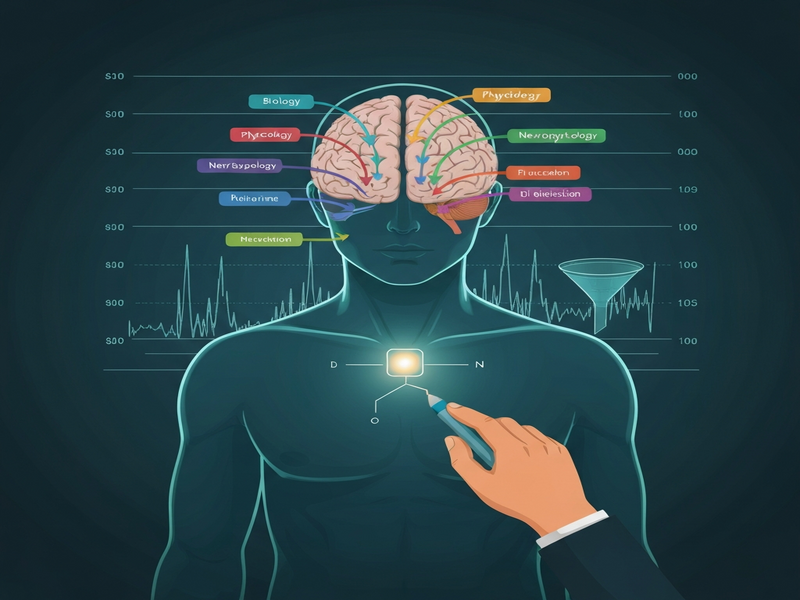
- State Vector Definition. At any given moment, an individual is characterised by a weighting vector s(t) that assigns importance to underlying dimensions such as hormonal balance, circadian phase, attentional bandwidth, and neuro‑psychological priors.
- Causal Decision Engine. The decision‑outcome pipeline is modelled as a causal graph where s(t) directly influences the transformation of an external stimulus into a decision d and subsequently into an observable outcome o. The graph is acyclic, ensuring that intervening on s(t) can deterministically shift o.
- Intervention Protocol. An external system (e.g., a digital health app) can apply a targeted stimulus that nudges specific dimensions of s(t) just before the decision point. Because the state evolves on sub‑daily timescales, timing is critical: the intervention must align with the moment the attentional bottleneck is about to open.
In essence, the framework reframes variability from a problem to a resource: by estimating the current state and applying a calibrated nudge, outcomes become conditionally controllable.
How It Works in Practice
Implementing the causal‑state‑intervention loop requires four coordinated components:
1. Continuous State Sensing
Wearables, passive smartphone sensors, and brief self‑report probes feed into a real‑time inference engine that estimates s(t). Machine‑learning models trained on the 24‑month observational dataset (200 k+ users) map raw signals to latent dimensions using Bayesian filtering.
2. Decision‑Timing Detector
A lightweight classifier predicts when a user is about to make a decision relevant to the target outcome (e.g., choosing to start a workout, responding to a therapeutic prompt). This detector flags a narrow temporal window—typically a few seconds—when the attentional bottleneck is open.
3. Intervention Generator
Based on the estimated state and the upcoming decision, a policy network selects an intervention modality (audio cue, visual prompt, micro‑feedback) and calibrates its intensity to shift the relevant dimensions of s(t). For example, a calming tone may down‑weight stress‑related dimensions before a meditation decision.
4. Outcome Logger & Feedback Loop
After the decision, the system records the observable outcome and updates the state model, closing the causal loop. Over time, the policy refines its mapping from state to intervention, converging on the most efficient nudges.
What distinguishes this approach from conventional personalization is the explicit causal link between s(t) and the outcome, and the sub‑second timing that targets the attentional bottleneck rather than applying generic, time‑agnostic recommendations.
Evaluation & Results
The authors validated the framework across three real‑world scenarios drawn from their deployed platform:
- Physical‑activity initiation. Users received either a state‑aware audio cue or a generic reminder before a scheduled workout window.
- Stress‑reduction journaling. A micro‑feedback prompt was delivered when the state model indicated high cortisol‑related weighting.
- Learning‑module engagement. Visual nudges were timed to the predicted opening of the attentional bottleneck during an online course.
Key findings include:
- Outcome lift. State‑aware interventions increased the target behaviour by 18‑27 % relative to control groups receiving non‑targeted prompts.
- Reduced variance. Within‑person variability in outcomes dropped by roughly 35 % when interventions were aligned with the estimated state, confirming the controllability claim.
- Policy efficiency. The intervention generator required 40 % fewer cues to achieve the same lift, indicating that timing and personalization jointly improve signal‑to‑noise.
These results demonstrate that the causal‑state‑intervention framework does more than predict; it actively steers outcomes in a measurable, reproducible way.
Why This Matters for AI Systems and Agents
For AI practitioners building agents that interact with humans, the paper offers a concrete blueprint to move from reactive recommendation engines to proactive state‑aware orchestrators.
- Enhanced personalization. By embedding a latent‑state estimator, agents can tailor interventions to the user’s current physiological and cognitive condition, rather than relying on static profiles.
- Improved evaluation metrics. Traditional A/B tests conflate user heterogeneity with treatment effect. A causal‑state approach isolates the effect of the intervention, yielding cleaner lift measurements.
- Scalable orchestration. The modular components (sensing, timing, generation, feedback) map naturally onto existing workflow automation platforms, enabling enterprises to plug the framework into existing AI pipelines.
- Ethical agency. Because interventions are grounded in a causal model, designers can audit which dimensions are being targeted, supporting transparency and user consent.
Enterprises looking to embed such capabilities can start by integrating state‑sensing APIs and timing detectors into their existing AI stack. For example, the AI marketing agents offered on the UBOS platform already support real‑time user profiling and could be extended with a causal‑state layer to boost conversion rates while respecting user autonomy.
What Comes Next
While the study establishes a solid proof‑of‑concept, several open challenges remain:
- Granular state representation. Current models aggregate dozens of physiological signals into a single vector. Future work should explore hierarchical state spaces that capture both macro (circadian) and micro (micro‑stress spikes) dynamics.
- Cross‑domain generalization. The framework was tested in health, stress, and education contexts. Extending it to financial decision‑making or collaborative work environments will require domain‑specific causal graphs.
- Privacy‑preserving inference. Continuous sensing raises data‑privacy concerns. Techniques such as federated learning and differential privacy must be integrated to protect user data while maintaining state accuracy.
- Human‑in‑the‑loop control. Allowing users to view and adjust their own state vector could enhance agency and trust, but also introduces UI/UX complexities.
Addressing these gaps will likely involve interdisciplinary collaborations between AI engineers, behavioural scientists, and ethicists. Platforms that already provide end‑to‑end AI orchestration, such as the Enterprise AI platform by UBOS, are well positioned to experiment with these extensions, offering a sandbox for rapid prototyping and large‑scale rollout.
In summary, the causal‑state‑intervention framework reframes human variability from an obstacle into a controllable lever. By marrying real‑time latent‑state estimation with precisely timed nudges, AI systems can achieve higher efficacy, lower variance, and more ethical personalization across a spectrum of human‑centric applications.
Andrii Bidochko
CTO UBOS
Andrii Bidochko is an AI entrepreneur and researcher focused on AI agents, reinforcement learning, and autonomous systems. He writes about the technologies shaping the future of machine intelligence, from frontier models and agent architectures to real-world AI applications.