

- Updated: January 30, 2026
- 5 min read
Why Self‑Hosted AI Assistants Need Production‑Grade Hosting
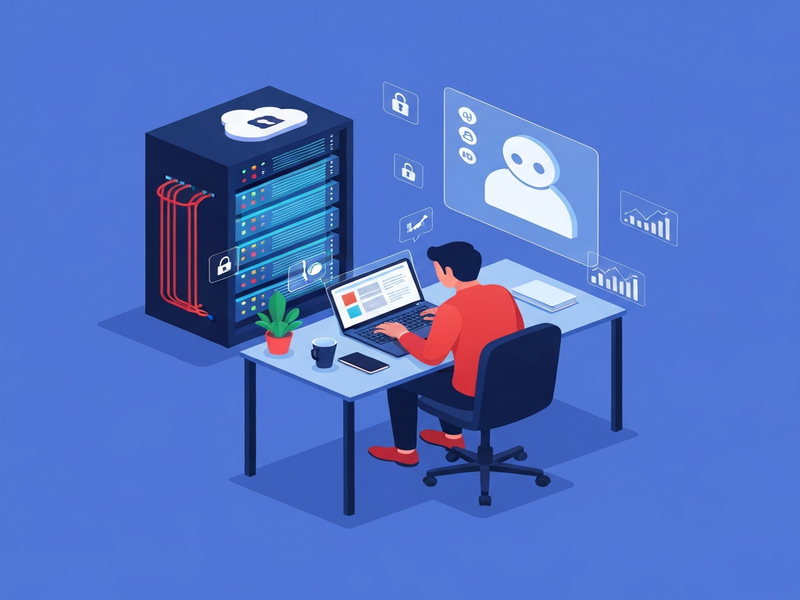
Self‑hosted AI assistants need production‑grade hosting because local environments cannot guarantee the reliability, security, and scalability required for real‑world deployments.
The Rise of Self‑Hosted AI Assistants
Over the past two years, developers have embraced self‑hosted AI assistants as a way to retain data ownership, customize behavior, and avoid vendor lock‑in. Projects such as Clawd.bot, Moltbot, and OpenClaw showcase how open‑source models can power conversational agents, task automation, and knowledge retrieval without relying on third‑party SaaS platforms.
These assistants excel in niche use‑cases—customer support, internal knowledge bases, and specialized workflow automation—yet many teams stumble when moving from a laptop prototype to a production environment.
Why Local Setups Fall Short
1. Resource Constraints
Running large language models (LLMs) locally often means sharing CPU/GPU, RAM, and storage with other development tools. A typical laptop can’t sustain the 8‑12 GB VRAM required for inference at scale, leading to latency spikes and frequent OOM errors.
2. Reliability & Uptime Issues
Local machines are prone to power cycles, OS updates, and network interruptions. For an AI assistant that must respond instantly to user queries, even a few minutes of downtime erodes trust and can cause revenue loss.
3. Security & Secret Management Challenges
API keys, database credentials, and encryption certificates are often stored in plain‑text config files during development. When the code is pushed to production without a robust secret‑management solution, the risk of credential leakage skyrockets.
4. Scaling Difficulties
As user traffic grows, a single workstation cannot horizontally scale. Load‑balancing, auto‑scaling groups, and container orchestration are essential, but they require infrastructure that most developers don’t have on a local machine.
Production‑Grade Hosting Requirements
- Always‑on servers: 24/7 availability with SLA‑grade uptime.
- Automatic HTTPS & certificates: End‑to‑end encryption without manual renewal.
- Secure secret storage: Encrypted vaults, rotation policies, and audit logs.
- Real‑time monitoring & alerts: Metrics, logs, and health checks visible in a dashboard.
- Seamless upgrades & rollbacks: Zero‑downtime deployments and version control for the runtime environment.
How UBOS Delivers Production‑Grade Hosting
One‑Click Cloud Deployment
UBOS provides a https://ubos.tech/hosting page that guides you through a single‑click deployment on major cloud providers (AWS, GCP, Azure). The underlying infrastructure is provisioned with high‑performance CPUs and GPUs, ensuring your AI assistant runs at optimal speed.
Built‑In Automatic HTTPS
Every UBOS instance ships with https://ubos.tech/https enabled out of the box. Let’s Encrypt certificates are auto‑renewed, removing the operational overhead of manual SSL management.
Integrated Secret Management
UBOS’s secret vault (https://ubos.tech/secret-management) encrypts keys at rest, supports rotation, and provides fine‑grained access controls. Your OpenAI API keys, database passwords, and webhook secrets stay hidden from the codebase.
Real‑Time Monitoring Dashboard
Through the https://ubos.tech/monitoring console you can visualize CPU/GPU usage, request latency, error rates, and set up Slack or email alerts. This visibility lets you react before users notice a problem.
Zero‑Downtime Upgrades
When a new model version or library update is released, UBOS handles the rollout via https://ubos.tech/upgrades. Blue‑green deployments guarantee that the old version stays live until the new one passes health checks, eliminating service interruptions.
All these capabilities are accessible from the UBOS homepage, where you can also explore the UBOS platform overview and see how the platform integrates with AI services like OpenAI ChatGPT integration or ChatGPT and Telegram integration.
Real‑World Benefits for Developers & Founders
- Faster time‑to‑market: Deploy in minutes instead of weeks of server provisioning.
- Lower operational overhead: No need for a dedicated DevOps team to manage certificates, secrets, or scaling policies.
- Improved reliability & user trust: 99.9 % uptime guarantees and encrypted traffic keep customers confident.
- Cost predictability: Transparent pricing on the UBOS pricing plans lets founders budget accurately.
- Seamless integration with existing workflows: Use the Workflow automation studio to trigger AI actions from CRM, ticketing, or CI/CD pipelines.
Accelerate Development with UBOS Templates
UBOS’s template marketplace offers pre‑built AI assistants that you can clone and customize. For example:
- AI SEO Analyzer – instantly audit website SEO with LLM‑driven insights.
- AI Article Copywriter – generate marketing copy on demand.
- AI Video Generator – turn scripts into short videos using generative models.
- GPT‑Powered Telegram Bot – combine the power of ChatGPT with Telegram’s messaging platform.
- AI Image Generator – create custom graphics for your assistant’s UI.
These templates already include the production‑grade hosting stack, so you can focus on business logic rather than infrastructure.
Industry Context
According to a recent original news article, the adoption rate of self‑hosted AI agents in enterprise environments grew by 73 % in the last twelve months, underscoring the urgency of reliable hosting solutions.
Conclusion: Production Hosting Is Not Optional
Self‑hosted AI assistants like Clawd.bot, Moltbot, and OpenClaw unlock powerful customization, but they demand the same robustness that SaaS platforms provide. By moving to a production‑grade environment—preferably the UBOS platform—developers and founders gain always‑on servers, automatic HTTPS, secure secret management, real‑time monitoring, and zero‑downtime upgrades.
Ready to power your AI assistant with enterprise‑grade reliability?
Andrii Bidochko
CTO UBOS
Andrii Bidochko is an AI entrepreneur and researcher focused on AI agents, reinforcement learning, and autonomous systems. He writes about the technologies shaping the future of machine intelligence, from frontier models and agent architectures to real-world AI applications.